Once upon a time, a man and a woman lived in a little cottage that backed onto the most magnificent garden — rows and rows of flowers and vegetables and herbs, all growing in perfect order behind a high stone wall.
The garden belonged to a witch. Everybody knew it, and everybody left it well alone.
Now, the woman was expecting a baby, and as sometimes happens, she developed a craving. Not for pickles, not for cake — but for the fresh green rapunzel lettuce she could see growing in neat rows on the other side of that wall. She thought about it at breakfast. She dreamed about it at night. At last her husband, who could not bear to see her pining, waited for a moonless night, climbed the wall, and pinched a handful.
The salad she made was so delicious that it only made things worse. "Just a little more," she begged. So over the wall he went again — and dropped down on the other side to find the witch standing right there, arms folded, one eyebrow raised.
"Well, well," she said. "A lettuce thief."
The poor man babbled out the whole story — his wife, the baby, the craving — and the witch listened, tapping her foot. "Very well," she said at last. "Take all the rapunzel you like. But when the child is born, she comes to me." And the man, who was too frightened to think straight, agreed — a promise he regretted the moment his feet touched the ground on his own side of the wall.
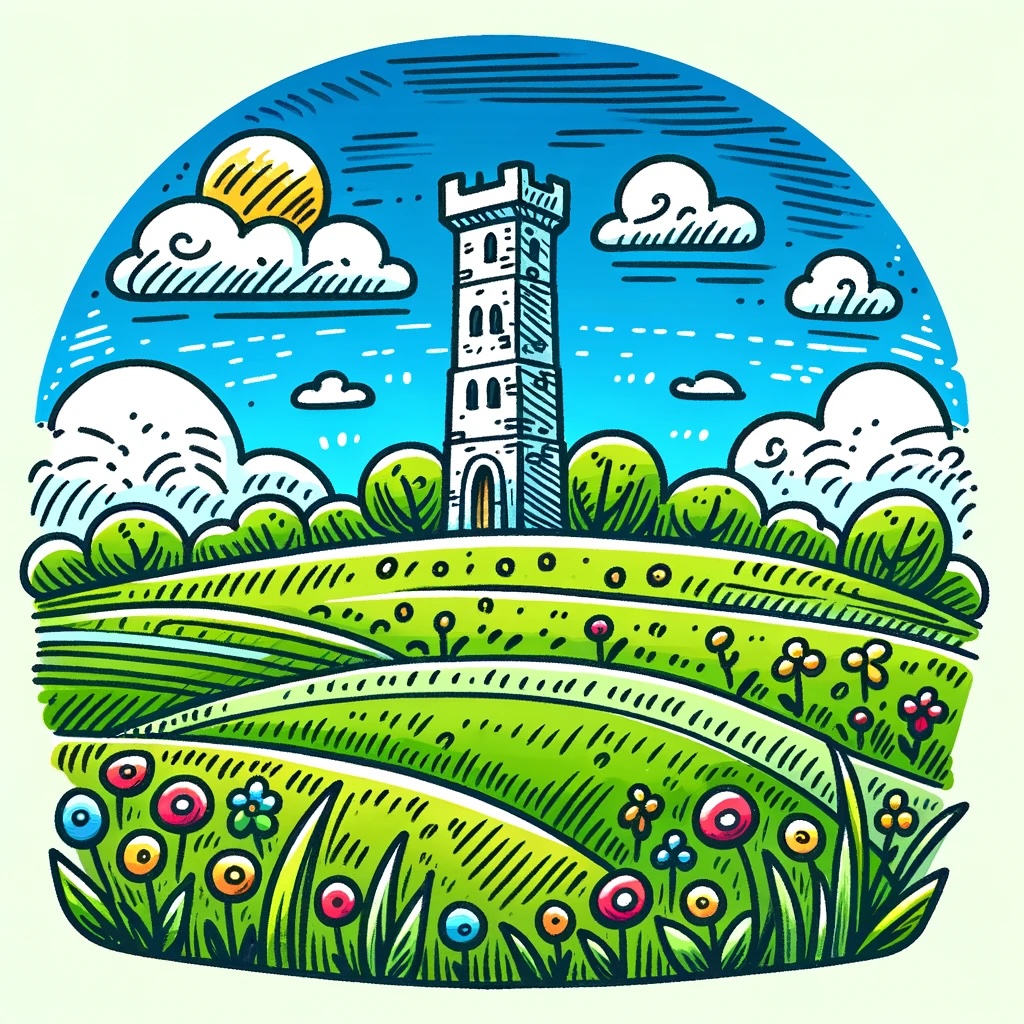
When a baby girl was born, the witch came to collect her, and named her Rapunzel, after the lettuce that started it all. She raised the girl as her own, and in her own strange way she loved her — but a witch's love can be a jealous, locked-up sort of love. When Rapunzel turned twelve, the witch shut her away in a tall stone tower deep in the forest: no stairs, no door, and only one little window at the very top.
Rapunzel grew up in that tower. Her hair grew with her — golden, impossibly long, and strong as woven silk. When the witch came visiting, she would stand below and call:
"Rapunzel, Rapunzel, let down your hair!"
And Rapunzel would loop her great golden braid over the window hook and let it tumble down, down, down the tower wall, so the witch could climb up.
It was lonely at the top of a tower. To keep herself company, Rapunzel sang — and her voice drifted out over the treetops, so lovely and so sad that the birds would stop to listen.
One evening, a prince riding home through the forest heard it too. He followed the song to the tower and circled it once, twice, three times. No door. No stairs. He was about to give up when he heard footsteps and hid — and watched the witch call out her strange greeting, and watched a river of golden hair spill down, and watched her climb.
Well, thought the prince. Now I know the password.
The next evening, he stood beneath the window and called — as gently as he could — "Rapunzel, Rapunzel, let down your hair!"
Down came the golden braid. Up went the prince. And Rapunzel, who had never seen another living soul besides the witch, nearly tipped him back out the window in fright. But the prince apologised so sincerely, and listened so kindly, and laughed so easily at her jokes — the first new jokes anyone had told her in years — that fright turned to friendship in a single evening. He came back the next night, and the next. Before long, they had a plan: each visit he would bring a skein of silk, and Rapunzel would weave a ladder of her own, and one day she would climb down it, free.
It nearly worked, too. But one afternoon Rapunzel, quite without thinking, said to the witch: "Why are you so much heavier to pull up than the prince?"
Oh dear.
The witch's fury shook the tower stones. Snip! — she cut off the golden braid. Then she spirited Rapunzel far away to a wild, lonely moor, and set a trap: that evening, when the prince called up, the witch lowered the cut braid and let him climb — and it was her sharp green eyes that met him at the window sill.
"The bird has flown," she hissed. "You'll never see her again!"
The prince, in his despair, leapt from the tower. The brambles below saved his life but scratched his eyes, and for a long time he wandered the wild lands blind, living on roots and berries, listening — always listening — for one voice.
Years, some say. Seasons, say others. However long it was, one day, far out on the windy moor, he heard it: a song, sad and lovely, coming across the heather. He stumbled toward it, calling her name, and Rapunzel ran to him and threw her arms around him and wept — and where her tears fell, his eyes healed, clear and bright, and the first thing he saw was her face.
Hand in hand they walked to his kingdom, where the bells rang for a week. And the prince and Rapunzel lived long and happily — with all the doors in the palace left wide open, all the stairs anyone could want, and windows that looked out on the whole wide world.
As for the witch, alone in her walled garden: the rapunzel lettuce still grows there in neat rows. But nobody has ever again been tempted to steal it.